
By Jeremy
In traditional urban analysis, every city is an ecosystem. A variety of complex interactions keep the city functioning. Kids hanging out in playgrounds, adults taking the train to work, people feeding the birds in the park, people buying groceries from their favorite corner store: all these activities feed into the function and stability of the city. Aligned with this view, the city is like other ecosystems—the center teems with a wide variety of folks with unique roles. These individuals could be nonprofit managers, service industry workers, tailors, artists, and more.
This view of the city may have been accurate at one point, but new realities in economic production and cost of living have made this analysis outdated. The modern city center is more and more a magnet for the creative class—professionals who operate in industries like finance, tech, general admin, marketing, and real estate. This fundamental shift in the city’s composition has cultural, economic, and political ramifications that are explored in Hinterland by Phil Neel.
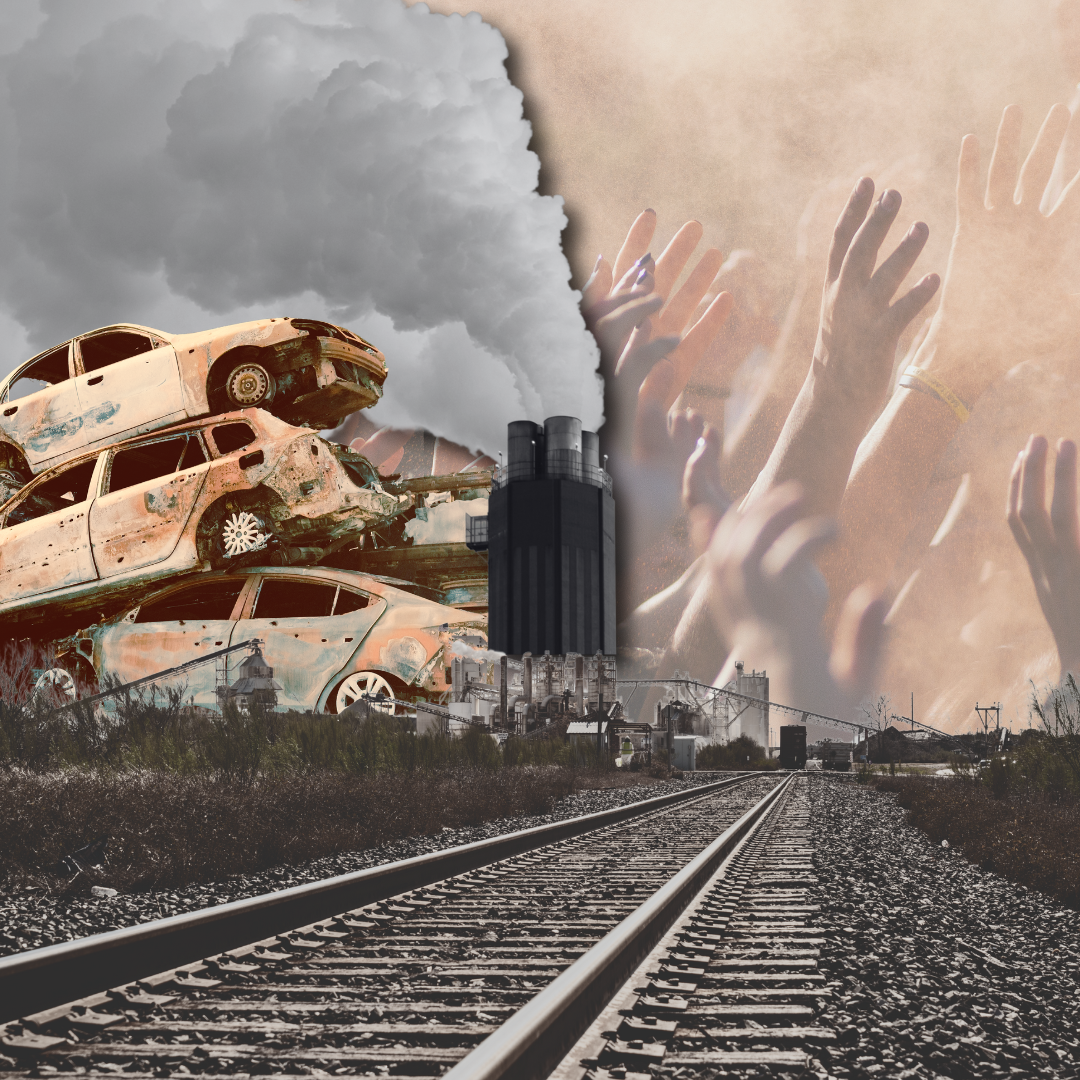
Neel’s overall thesis is that the saturation of creatives in the city center is reflective of an economic reorganization that has hurt the working class. As deindustrialization progresses, these creative class professionals become the focus of city operations. Development patterns cater to attracting more creatives and resources Are increasingly concentrated in the urban core. Along with this, the areas outside of the urban core (or hinterlands) change dramatically. These changes can result in dramatically different political leanings for communities that leftists have long wanted to help organize. Neel divides the hinterlands into two distinct camps: the near and the far.
In the U.S., the “near hinterland” is typified by suburbs, exurbs, and satellite cities with logistics infrastructure like Amazon and Walmart warehouses or highway/transportation corridors. Neel describes these development patterns as “built at the scale of capital” rather than for individuals. Near hinterland residents in the past heavily benefitted from proximity to the urban core, but transforming industry has resulted in a reduced number of available jobs in the city. The diminished job opportunities in the urban core drive working-class residents (who are increasingly non-white individuals fleeing the high costs of the city) into the arms of logistics developers, who offer low-paying, physically demanding jobs. These workers have vastly different experiences than the wealthiest residents in the near hinterland, who often have outsized influence on local governance.
The experiences of residents in the “far hinterland” are greatly different than those living closer to the urban core. At a high level, the far hinterland is more rural and lacks many luxuries found in the urban core. These communities may have once thrived, but the decline of manufacturing has left many areas hollowed out and deteriorating. This declining economic activity manifests in extractive industry, diminishing social interactions, underdeveloped infrastructure, and negative interactions with federal government entities who may own and rent out wide swaths of land in the community. A key component of the far hinterland is the proliferation of right-wing political groups that fulfill resident needs in the absence of public services. Fundamentally, these right-wing groups appeal to the desperation of voided out communities and provide tangible benefits.
In my view, this is a generally accurate breakdown of key dynamics we see in the country today. The increasing cost of living in the city and diversification of the suburbs has only increased since 2017. Neel also accurately points out that the left has become more concentrated in cities—a trend that is accelerating as many Americans flock to live in areas aligned with their political views. These patterns have led to leftists neglecting residents of the hinterlands, leaving them open to the appeals of right-wing political figures and groups.
The 2016 election of Donald Trump was a clear sign of these communities’ dissatisfaction with the neoliberal politics responsible for current conditions. Many communities in the Midwest voted for the Republican party after decades of being reliable Democratic party supporters. A big factor in this was Trump’s effective rhetoric against de-industrialization that the Democrats accelerated by supporting unfettered free trade agreements. In the aftermath of 2016, electoral-minded leftists have pushed for greater emphasis on working class politics to draw these hinterland voters away from the Republicans. Despite this, the Democrats have increasingly leaned into a strategy of courting highly educated voters from the urban core and suburbs.
Where does this leave leftists? If many of us don’t live in the hinterlands and can’t count on the Democratic party to prioritize working class politics from the top-down, where do we turn? The traditional answer for the left lies in labor organizing and demonstrating. For Neel, there is the riot. The riot in Neel’s estimation is less a solution and more a natural consequence of deindustrialization and community decay. He details the 2014 rioting in Ferguson, MO that arose in response to longstanding racial and economic injustices the community faced. Ultimately, Neel contends that sustained unrest and riots like seen in Ferguson will become more common in neglected communities—forcing systems to reckon with the needs that residents have. These riots would be particularly impactful and disruptive in hinterland communities with logistics infrastructure. Given the landscape of the hinterlands, Neel foresees decentralized riots as more likely than any organized action with clear policy goals. In my view, this is where Neel’s analysis is incomplete. I see evidence of a strengthening organized labor movement that the left can use to organize communities in the hinterlands and urban core.
When Hinterland was released in 2018, there was a certain bleakness that dominated the American political landscape. Trump’s Republican party used their control of the White House and Congress to stack the judiciary with hard right judges and the Democratic party was actively blaming the left for losing the 2016 election. After running on a pro-manufacturing agenda, the Republicans of course continued to funnel money to capitalists who happily carried on outsourcing jobs. Despite this grim reality, we began to see positive developments in labor politics—and not just in the urban core. Famously, over 20,000 teachers and public-school workers participated in the 2018 West Virginia strike that shut down schools in all 55 counties of the state. This strike won teachers’ pay raises and inspired other efforts across the country, particularly in rural states like Oklahoma and Kentucky.
In the 2018 midterm elections, Democratic party voters elected many officials who were decidedly to the left of party leadership on key labor issues. In 2019, General Motors employees belonging to the United Auto Workers (UAW) held the longest auto worker strike in 50 years. In 2020, a global pandemic brought the U.S. to its knees and we saw the largest protest movement in a generation, as millions across the country and world marched for racial justice. These protests highlighted the full extent of economic, social, and environmental injustices that black communities in particular face. In the face of so many political setbacks during these years including the stacking of the Supreme Court with right-wing zealots, gutting of key environmental and labor protections, and the Democrats nominating a proud corporatist in Joe Biden, there was mass energy for organizing.
This energy has carried on through the past few years as well—particularly in regards to labor politics. In 2021, Starbucks workers in Buffalo, NY voted to unionize their Elmwood Avenue store. I was attending the University at Buffalo for grad school at the time and the energy after this successful effort was palpable. In the following months, hundreds of Starbucks locations in urban cores and hinterland areas held unionization votes. Currently, there are over 400 unionized Starbucks locations across 44 states in the country. The UAW strike in 2023 hit three factory locations in Wayne, MI; Wentzville, MO; and Toledo, OH. These strikes happened in an urban core and two near hinterland areas, but the gains that workers won were felt by about 145,000 employees represented by UAW – some of whom may live in the far hinterland outside of their workplace.
Other highly visible labor actions in the past few years include a variety of healthcare worker strikes, the 2023 Hollywood writers’ & actors’ strikes, the active Boeing workers’ strike, the 2022 rail workers labor dispute, and the 2024 dock workers labor dispute. In addition to many of these actions directly impacting communities in the hinterlands, the actions without direct impact can receive publicity that may shift people’s politics in a pro-labor direction.
Potential evidence for this concept is that 70% of Americans approve of labor unions—up from a low of 48% in 2009 and increasing further from 56% in 2016; however, there is no guarantee that this energy and positive move in labor’s direction will last. While the Biden administration’s anti-trust policies under the Federal Trade Commission (FTC) and very pro-worker National Labor Relations Board (NLRB) have greatly contributed to the strengthening of labor politics in the country, I would be remiss to not mention that the Democratic party squashed most substantial police reform that protesters fought for in the summer of 2020. This ignoring of popular will signals that if leftists allow them to, the Democrats will happily slide backwards and begin to work against labor again (as indicated by wealthy donors to Kamala Harris openly lobbying for her to remove the FTC Chair Lina Khan, who was perceived as a financial watchdog and antitrust enforcer by both Democratic and Republican big dollar donors). We have to capitalize on this momentum with clear, pro-labor organizing in urban cores and hinterlands.
This will not be easy, as only 10% of Americans belong to a union today—an historically low figure. Additionally, the sprawling nature of the US presents a major hurdle for some leftists in the urban core who want to help organize hinterland communities and vice versa. From my perspective, however, these factors can be overcome by acting locally while thinking regionally. If 70% of Americans approve of labor unions, the 90% of Americans not currently in a union are fertile ground for organizing. We have to recognize that worker dissatisfaction transcends physical boundaries between the urban core and hinterlands. Leftists wherever they live must collaborate with each other by joining established organizations or starting new ones if none exist. This way, we can collectively encourage and help publicize burgeoning labor actions in our respective communities.
Through these actions, large victories for workers in the urban core can help inspire workers in the hinterlands. Large victories for workers in the hinterlands can inspire workers in the urban core. Critically, leftist groups need to serve as valuable assets for individuals interested in organizing their workplaces, regardless of where they are located. This will require being generous with time and sharing resources between organizations—key collaboration methods that can be notoriously tricky between leftist groups. I am confident, however, that we can meet this moment in labor history and keep the momentum going.
Our organized action can help deliver tangible wins for the working class, from the hinterlands to the urban core.

 The Philadelphia Partisan