
“Pro-Life” Necromancy Takes Root In Georgia
By I. Pliskin
The idea of zombies and invasions of the living dead have been a big waxing and waning part of modern popular culture. From Dr. Frankenstein and his reanimated monster, to popular video game series and zionist propaganda The Last Of Us — for centuries, we’ve entertained ourselves with stories with the formerly dead coming back to life to cause us terror. But long before zombies and the like were the popular cultural icon they are today, horrifying tales of reanimation and the living dead were whispered among enslaved Africans on Caribbean plantations. However, the terror of these zombie tales weren’t about trying to survive roaming bands of flesh eating monsters — amongst the enslaved was a fear that not even death would end their restless toil on the fields of the plantation. Within their stories, fears that bad karma or european magics would bind their souls to their ever-enslaved bodies beyond even death to forever be slaves on a strange land far from home. Policy makers and health professionals in Georgia are working around the clock to transform this myth into reality, and if nothing is done about it the case of Adriana Smith is them just getting started.
Early this year Adriana Smith went to the hospital facing severe headaches, for which she was sent back home without getting a full evaluation. Shortly, she had to be ambulanced back to the hospital, where she suffered brain death that was determined after the fact to be caused by blood clots in her brain. Despite not giving two shits about the life and wellbeing of the mother, claiming that they were just practicing standard procedure when the hospital didn’t give her proper care prior, the hospital is now advancing the most advanced, cutting edge technologies and techniques to keep her undead body animated long enough to carry a fetus to viability. Adriana was only two months pregnant when she died on February 19th. As of writing this it’s now two months later, and it will likely be four more months still until the fetus could feasibly(?) be removed from the mother’s undead body. This is not a miracle beset by some tragic accident. This is murder and necromancy.
Legislation and policy that values life would have actually valued the life of Adriana. Instead, her death was a factor of profit centered medical policy that prioritizes overworking healthcare workers and underinvesting in facilities in a bid to save as much money they can get away with — rather than really valuing the lives of people dependent on these systems to receive care. Yet, even if the system only valued the fetus Adriana was carrying, the best bet for its fate would have been preserving the life of its mother. What we have here — what we’re living in — is a system that overtly values death over life. The hospital cast Adriana away when she was in need because they didn’t feel it would be profitable enough to preserve her life. Make no mistake, these systems have little morality outside of profit. The systems at play didn’t have a sudden change of heart and decide they now realize the innate value of human life. This body is being artificially preserved as an incubator because it has been determined by key decision makers that this will be a profitable decision. This is being done precisely because the people involved don’t value human life — they view it as expendable. Expendability is a key part of profitability under our capitalist systems. It is critical to all the bosses and owners and lords out there that they can squeeze all the value they can out of us and throw us away when we’re all tapped out — and it’s critical that there’s always someone right around the corner ready to take our place should we ever complain, quit, or die. Not satisfied enough with that arrangement, the capitalist systems we live in are now seeking to exploit us until we die — and replace us with and through our own dead bodies. And so it is each of our responsibilities, not just materially but spiritually, to resist these capitalist systems we live in, otherwise we’re just seeing a glimpse of what is in store for us.
Policy Limits Mobile Services in Kensington
By I. Pliskin
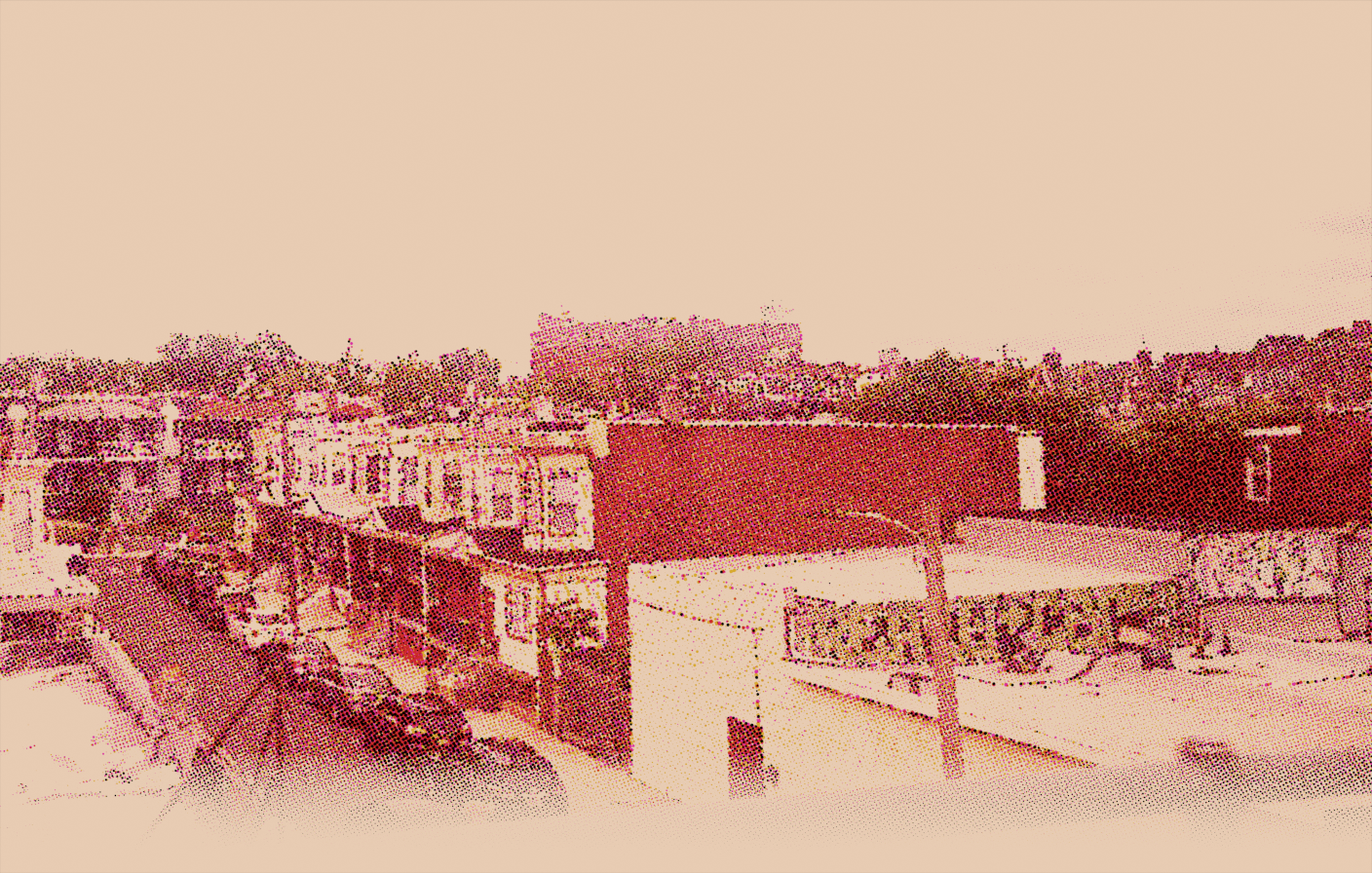
This past month Philadelphia City Council and Mayor Parker approved a new ordinance that will heavily restrict mobile service providers in the Kensington neighborhood of the city. There are a large number of people in the area who are struggling with homelessness and drug addiction. While up to now the service providers provided a much-needed lifeline to those people — the new regulations will make it a lot more difficult to provide aid and to reduce harm to those citizens. Specifically, what the new regulations put forward is a stricter permit system that will reduce the amount of service providers legally allowed to serve the area and a stipulation that mobile providers can’t stay in any given spot for any longer than 45 minutes before they must move at least 1000 feet away from where they were located prior.
While the city can pretend like this is some sort of remedy, it’s more reminiscent of a final solution. The government doesn’t want to deal with the optics of the city’s most unassisted, so they’re opting for gradual elimination. Of course, when pressed they’ll try to euphemize what they’re doing here: they’ll say they’re trying to get them to go to some mystical “somewhere else” outside of the neighborhood and the city. Or they’ll pretend like they’re somehow offering sufficient service to get people back on their feet while actively working to restrict and eliminate the actual resources and support being used. If you press them further they’ll say they’re implementing a “tough love” type of policy — that making life harsher for houseless residents will push them into getting their life back together. The truth is that the goal of these policies is to get people to look the other way while their houseless neighbors die from starvation and exposure.
Arbitrary policies like this mostly just make it harder for people to get involved and help their neighbors. City Council wants to make it so difficult for people to lend a helping hand that they decide not to. And with fewer eyes and ears around they will ramp up their cruelty. The capitalists that have most of the control over our government don’t want any of us to have any social safety nets. Landlords want us desperate to pay their rents no matter how high they raise them or how deplorable they keep their properties. Bosses want you so desperate to pay the landlord you take whatever pay they give you and work however many hours they make you. Both benefit when it’s certain that neither government nor community will be around for you to help pick you back up if you fall below their heightening demands. That is to say in the wake of policies like this, it’s more important than ever to look after and be in community with your neighbors, both housed and unhoused.
Philly’s Failing Air Quality
By I. Pliskin
The American Lung Association has recently given the city of Philadelphia straight F grades in its annual “State of the Air” report. The association comes up with this grade based on how often they measure harmful concentrations of pollution and ozone in air around the city. In the last report the city received a “C” rating — it’s likely that this year’s “F” rating comes in part from the many days we were exposed to dangerous chemicals from the Canadian wildfires and the billows of smoke that made their way south through the city. Regardless, poor air quality and high pollution is a direct cause of many diseases and worsens issues for people with already existing breathing issues such as asthma.
Air quality in Philly potentially being impacted by something that happened all the way north in Canada is a big example of how we have to care about more than just what happens in our backyards. I feel like it can be easy to hear about something happening in a different state, country, or continent even, and it seems like it might as well be happening in a completely different dimension. Yet we’re all very much deeply connected to one another. Dust from the Sahara Desert gets blown by wind to the opposite side of the world to feed the lush Amazon rain forest with fertilizing phosphorus . Trump’s recent tariffs are revealing how dependent everyday goods we use are dependent on global supply chains.
And you know what — the world’s a pretty big place. What could a working person from Philly be expected to do about wildfires going on all the way in Canada? At the same time, if we’re deeply connected with people all the way across the globe from us, then we’re definitely connected to our neighbors and the communities we live in. The things we do affect them, and the things they do affect us. If I’m thinking about air quality and our immediate communities, I can’t help but think about how many people have just given up on masking and clean air in the ongoing wake of COVID. Many have done so because they’ve decided that their own health risk from ongoing infection is minimal. Yet, even if it’s true, it’s marked by a forgoing of neighbors and community members that are more vulnerable. And what do we have to show for it? “F” quality air, that’s what. The same systems and urges that compel us not to care about our next neighbor are the same that will make life worse for all of us in sum total. We might not be able to control the winds or the global economy (not tomorrow), but I’m sure most reading this could bear to mask up more often and to be a better example to others in their communities. I’m sure many can open up a window or two at work to improve air flow. We can decide to care a little bit more about the people around us, and through that create a culture better able to tackle some of the bigger stuff on tomorrow’s tomorrow. That would be a breath of fresh air to me.
Pennsylvania Court Denies Name Change for Trans Child
By I. Pliskin
Back in 2023, the parents of a 9-year-old trans boy — who identified as a boy since he was 2 — filed for him to be granted a legal name change in a Montgomery County court. The Judge, Bernard A. Moore, denied the initial motion. Judge Moore apparently left the courtroom before the boy could testify on his own behalf and refused to accept written testimony from multiple professionals working with the child who verified that the name change would be in the boy’s interest. Despite refusing relevant evidence and information, Judge Moore ruled there wasn’t enough proof that the name change would be in the child’s interest. The family appealed the ruling to PA’s Superior Court, but the Superior Court sided with Judge Moore stating that the family failed to prove the name change would “nurture the familial bonds or help avoid social stigma” in the initial case. In the time since, Judge Moore has retired, and in the wake a separate County Judge has granted the boy’s name change earlier this month. The family still has a pending appeal to the state’s Supreme Court on the question of the legality of Judge Moore’s conduct and potential overreach.
Earlier this year, a federal court agreed to hear a lawsuit from the mother of a trans boy in another Pennsylvania school district. The mother is suing the district because teachers and administrators agreed to refer to the child by his preferred name and pronouns, and she felt like that violated her “right to oversee [her] children’s upbringing, including the gender pronouns they use in school.”
Beyond whatever legal decisions are made in either case, I feel like both cases reveal the permeability of the conservative fight against trans rights. In one realm it’s important that parents are the ultimate authority on their children. Yet at the same time, the argument can be that neither parents nor a community of trusted professionals and caretakers can be relied on to make the correct decision. Conservatives and transphobes have become very adept at the situational use of language and rhetoric to advance their cause. The truth is they don’t care about any supposed “parental rights” besides their own entitlements. The only “experts” they care about are the ones that validate their own bigotry. They’re making a boogeyman out of girls’ sports, but if they weren’t using it as a weapon against trans people they’d be the first to see those programs hit the chopping block.
This isn’t just around trans issues. Many people, even otherwise progressive, are day by day being swayed against their own interests and principles because they’re honestly just pretty good at arguing their point. They don’t fight their arguments based on what they actually believe in or what they ultimately want to achieve. They instead take advantage of talking points meant to sound reasonable — and they leverage existing biases, fears, internalized ideas, and approximate understandings to do it. They can’t ban school age kids from transitioning, but they can push for them to be banned from sports and extracurricular activities by pressing against people’s limited notions of what does or doesn’t feel fair. They can’t ban abortion outright nationally, so they make the issue about “states’ rights”. They can’t put forward a flat income tax, but they’ll put forward “protectionary” tariffs that you’ll have to pay for anyway. Don’t fall for the shell games and the okey doke just because these policies and decisions don’t affect you directly — trust and believe your own biases and predispositions are being used to fighting against your peers and for people that see you just the same as the people you’re turning your back on.
Apprenticeship Program Launched to Address PA Special Education Gap
By I. Pliskin
In the wake of more teachers than ever leaving the profession, a large gap is forming between how many special education teachers are available for students and how many are needed. In Pennsylvania, around 20% of students need some type of special education service. Many teachers are leaving the field due to issues like low pay and poor working conditions. At least for special education, Gwynedd Mercy University and Bucks County Community College are attempting to create an apprenticeship program that will fast track existing professionals working with special needs students into becoming fully qualified special education teachers.
While this is very well a positive program, it’s worth taking a step back to look at the big picture. A big reason teachers were leaving the profession to begin with was low pay and bad working conditions. The only parties really benefiting from this program, as is, are people treating education as a profit based enterprise. There are already qualified certified teachers out there, schools need to actually pay them an appropriate amount and hire enough of them that they can have manageable workloads. If you’re not going to fix that then what are we doing here? Special needs professionals are going to do their existing jobs on top of splitting their attention on extra schooling ultimately for what? To get underpaid and burnt out themselves? We’re all getting played in our faces with stuff like this.
For this (and any program like this) to be any good, it’s going to need to be paired with better compensation and better working conditions. Arguably, if you fix those two you won’t have to try getting clever about college credits and work study arrangements or whatever other thing you try to pretend to solve the problem.

 The Philadelphia Partisan