

By E. Morten
On the campaign trail, Parker promised housing would be one of her top priorities, second only to public safety. Her administration has cited that Philadelphia is short about 17,000 housing units; in addition, 38% of all housing units in Philadelphia have repair needs. Indeed, these are issues that put major strain on the working class.
H.O.M.E., or Housing Opportunities Made Easy, is Parker’s attempt to make good on her word. The basic premise is to “build or restore 30,000 homes” in several neighborhoods across Philadelphia; it is purported to be the “largest single investment in housing in Philadelphia’s history.” However, this initiative does not address the root cause of the housing crisis at all and will exacerbate the issues that push people out of stable living conditions.
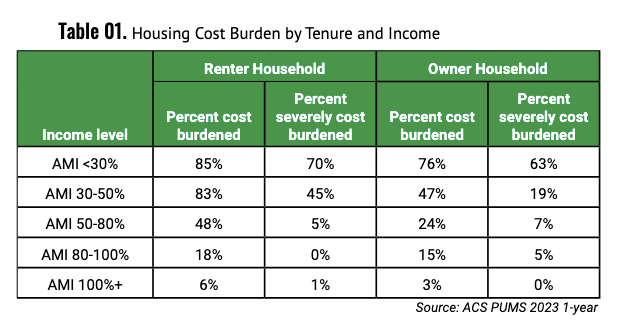
AMI = Annual Median Income ($72,056 annually)
The deficits in the H.O.M.E. Initiative are the inevitable outcome of years of devaluing, ignoring, and criminalizing specific existing communities, namely the homeless and housing insecure. We see time and time again that the problems with housing have to do with cost of living. The Mayor’s focus on an aesthetic ‘tune-up’ to attract developers will only speed up gentrification and worsen the root issue.
According to research by the Housing Initiative at Penn, about 64% of Philadelphia’s homes were built before 1960. These older properties are at a higher risk of disrepair, and tends to need more work to remain safe. In addition, there are many homes missing basic necessities. For example, there are about 14,000 homes in Philadelphia that lack complete kitchen or plumbing facilities.
If necessary repairs are left unaddressed, or a natural disaster worsens existing problems, properties can degrade to the point they become uninhabitable, and be considered a “blight” to the community. Households with lower incomes carry a much heavier burden keeping their homes safe, and unorganized tenants are left at the mercy of their landlord’s willingness to adequately fix problems.
The city introduced the Basic Systems Repairs Program (BSRP) in 1982; an attempt to help low income tenants receive free emergency repairs which can help them avoid their home being perceived as a blight. However, tenants are often forced to wait months or years for a necessary fix due to a massive backlog.
“Much of the housing that we consider affordable is comprised of these units,” said state Senator Nikil Saval. “When our small landlords are forced to sell their properties or to forgo repairs, the loss of this housing is experienced across our city and the repercussions are irreversible.”
These “blight” evictions are approved by judges, enforced by police, and fall on the shoulders of working class tenants— but for the Mayor, this is not the main concern.
Instead, H.O.M.E.’s vision focuses on reducing real estate transfer taxes and removing barriers for residential developers.
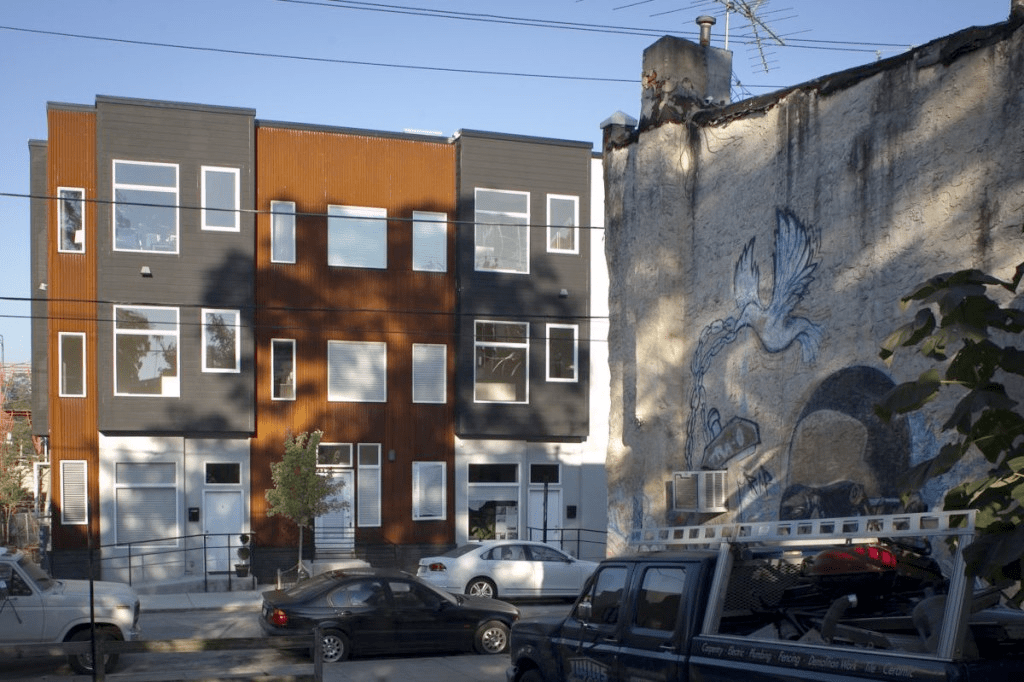
“If we pass this plan and we implement it in the city,” Mayor Parker said during an address to City Council in March 2025, “You won’t know if you’re looking at an affordable house, or a market-rate house, because of the quality of the amenities across the board. They will be aesthetically appealing and provide the dignity that all Philadelphians deserve, no matter their socioeconomic status.”
The H.O.M.E. Initiative focuses on aesthetic real estate, instead of investing in existing properties to create comfortable and safe homes for existing residents. It paints a vision of “affordable luxury” meant for real estate developers, middle-class transplants, and businesses who can cash in on gentrification.
Source: Center City Team Real Estate
The Parker administration has plans of expansion for the BSRP, too. Despite the long waits, this service has remained extremely popular. The H.O.M.E. initiative seeks to expand the eligibility for the program for that reason, but does not match that expansion with an appropriate budget.
Before H.O.M.E., a qualifying household had to earn less than 60% of the area’s median income. However, Parker’s proposal expands the eligibility to up to 100% of an area’s median, a change that will roughly double the number of eligible applicants. While the BSRP’s budget will receive an additional $7 million, the scope of the program’s expansion far outpaces the increase in funds. This will only increase the number of people who join the wait list and never receive help.
Despite some reservations from lawmakers, this initiative has been well received, and passed earlier this year. In response to concerns about speed or lack of robust strategy, the administration wants to remind us that we are in a housing crisis, and time is of the essence. This messaging is particularly vexing; as if the city has just discovered the crisis!
If the focus of the H.O.M.E. initiative was truly about saving existing homes, one might expect to see an effort to relieve the tenants currently surviving in unsuitable living conditions, or a robust system to stop bogus evictions. Instead we see schemes meant to usher in new development— no doubt gentrifying neighborhoods in the process.
Once again, it is up to us as the working class to take care of ourselves. If the Mayor wants to usher in more landlords who build unaffordable homes , we need to be ready to resist them as much as we can. This starts with your community. If you don’t know your neighbors, make time to knock on some doors this autumn. You just might make a friend and it won’t take long for you to uncover some key issues you and your neighbors can unite around. Head to a Philadelphia Tenants Union meeting, too.
Despite the messaging from the Mayor, her administration is not interested in making a better city for the working class. The H.O.M.E. Initiative is part of a long legacy of half-baked projects, intended to placate instead of accommodate. The working class will still be here when the administration proposes its next grand bandaid.

 The Philadelphia Partisan